

Export Standards & Procedures for Garments to the U.S. and Global Markets (Updated 2025)
Vietnam’s Garment Export Performance in 2025
In the first five months of 2025, Vietnam’s garment exports continued stable growth, reaching USD 17.58 billion, up 9% YoY, with a trade surplus of USD 6.95 billion.

Vietnam’s Garment Export Performance in 2025
Key Export Markets for Vietnamese Garments
The United States remains the top destination, accounting for 38–44% of total exports, followed by Japan, South Korea, and the EU. However, the U.S. has imposed new tariffs—10% since April 2025, with a proposed hike to 46% (currently postponed for 90 days). In response, Vietnamese exporters are accelerating shipments and diversifying toward Japan, the EU, and the UK. The industry is targeting USD 47–48 billion in exports for the full year.
Raw Material Dependency Risks
One of the biggest challenges for Vietnam’s garment industry is its high dependency on imported raw materials, particularly yarns and fabrics from China. This leads to two major risks:
- Ineligibility for FTA tariff preferences (CPTPP, EVFTA, RCEP) due to failure to meet rules of origin.
- Limited traceability, complicating responses to trade disputes or origin fraud inspections.
Vietnam’s Ministry of Industry and Trade urges manufacturers to control input sourcing and diversify suppliers from FTA-partner countries such as South Korea, Japan, and ASEAN—or develop domestic yarn/fabric production to increase compliance with origin criteria.
>> Read More: What is EVFTA? The EU-Vietnam Free Trade Agreement Explained
Sustainability Trend in the Global Garment Industry
The global textile and garment industry is rapidly shifting toward green and circular production, driven by regulatory frameworks like the EU Green Deal and textile waste laws in developed nations.
In Europe, sustainability is no longer optional—it’s becoming legally binding for importers. As of 2025:
- Around 10% of garment factories in Vietnam are fully green-certified, using renewable energy, wastewater treatment, and fabric recycling.
- 50% are actively implementing sustainability initiatives.
- 40% are still in early planning or consideration stages.
Though this transformation poses challenges, it also presents an opportunity to enhance brand value and access premium markets committed to ESG standards.
Export Standards for Garments to the U.S. and Other Markets (2025)
Garment exports are a cornerstone of Vietnam’s economy. To enter high-standard markets like the U.S., EU, Japan, and South Korea, exporters must strictly comply with quality standards, product labeling, export documentation, and customs procedures.
| Standard | Specific Requirements |
| Fabric Composition | Clear sourcing, free from banned substances (e.g. azo dyes, formaldehyde). |
| Technical Specifications | Stitching, elasticity, colorfastness, size compliance per ASTM (U.S.), ISO (global), JIS (Japan). |
| Quality Certifications | OEKO-TEX, GOTS, WRAP, BSCI, REACH (varies by market). |
| Traceability | Yarn source, manufacturing plant, and process transparency for CO and FTA claims. |
| Labeling | Must indicate: country of origin, fiber content, care instructions, manufacturer code, and local language. |
Garment Labeling by Country: What You Need to Know

Garment Labeling by Country
Correct labeling is critical to customs clearance and consumer trust in target markets.
United States
- Origin: Must state “Made in Vietnam” per origin rules.
- Language: English only.
- Contents: Manufacturer name, fiber composition, care instructions, traceability code.
- Label Placement: Must be permanently attached (e.g., collar, side seam), not hangtags.
- Children’s apparel: Must comply with CPSIA (chemical & physical safety tests).
European Union (EU)
- Language: Must use the local language of each country (e.g., French, German, Spanish).
- Contents: Detailed fiber breakdown, ISO 3758 care symbols.
- Eco-certifications: Importers often require OEKO-TEX, GOTS, or REACH compliance.
- Green labeling: In markets like Germany and the Netherlands, sustainability messaging is expected.
Japan
- Language: Japanese only.
- Mandatory fields: Fiber ratio, washing instructions, manufacturer name/location, product code.
- Label Placement: Sewn-in (neckline, inner seam); woven or heat transfer labels.
- Applicable Standard: Must comply with JIS L0001 textile regulations.
South Korea
- Language: Korean.
- Required details: Origin, manufacturer name, care guide, size, factory code.
- Special cases: Products for children or skin-contact garments may require toxicity test reports.
- Label Placement: Same as Japan – inside the product, easily accessible.
Note: Incorrect or non-compliant labeling can lead to returned shipments or loss of tariff preferences.
Required Export Documents for Garment Shipments
This is the mandatory document set required for customs clearance and legal exports:
1. Commercial Invoice
2. Packing List
3. Bill of Lading or Airway Bill
4. Export Customs Declaration (cleared)
5. Certificate of Origin (C/O): Form D (ASEAN), Form B (neutral), Form RCEP, Form CPTPP, etc.
6. Quality Certifications (if any): OEKO-TEX, GOTS, etc.
7. Catalog or Label Sample tailored to the destination country
>> Read More: What Is the CPTPP Agreement? Opportunities and Challenges for Vietnamese Businesses
Garment Export Process: Step-by-Step
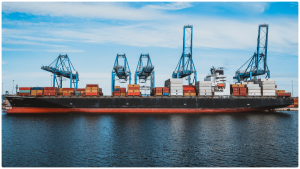
Garment Export Process
1. Sign contract with the buyer: Define Incoterms (FOB, CIF, EXW…) and required certifications.
2. Prepare order and production: Make sample garments, conduct quality checks.
3. Design and print labels per the standards of the importing country.
4. Register for quality inspection (if required): Children’s products, organic textiles, animal-origin materials.
5. Prepare export documents as listed above.
6. Declare to customs and ship goods via seaport or airport.
7. Transfer documents to buyer or through bank (for L/C transactions).
>> Read More: The Impact of Incoterms on Costs and Responsibilities in International Trade
Customs & Export Procedures for Garments

Customs & Export Procedures for Garments
Governing Body: The Ministry of Industry and Trade does not require an export license for regular garments. However, licenses or inspections may apply for products containing leather, feathers, or items requiring quarantine.
Customs Declaration: Declare under correct HS codes, submit C/O, and undergo physical inspection if flagged high risk.
Taxes & FTA Incentives:
- Import duties range from 0–10% without C/O.
- 0% duty applies if C/O is valid and rules of origin are met.
>> Read More: Import Duties on Textile Fabrics from China
Contact KFLV – Garment Export Consultation & Support
Are you looking to:
- Optimize labeling for different export markets?
- Obtain proper Certificates of Origin under CPTPP, EVFTA, RCEP…?
- Understand the full export process and required documents?
Contact King Freight Logistics Vietnam at +84 (0) 938 188 796 or cs1@hcm.kfkingfreight.com to receive expert guidance from our dedicated apparel export team.
Written bykflv.vn
Other activities

Other news
What is a Surrendered Bill of Lading? When Should It Be Used in International Trade? In international shipping, a Bill of Lading (B/L) is not only a transport document but can also function as a document of title to the cargo. However, in many cases businesses do not need this ownership function and choose to […]