

Vietnam Coffee Export 2025: Latest Procedures, Market Opportunities & Required Documents
Overview of Vietnam’s Coffee Export Market in 2025
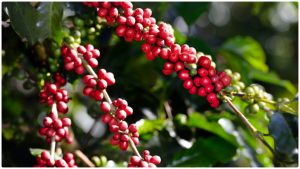
Vietnam Coffee Export Market
In 2025, Vietnam remains the world’s second-largest coffee exporter after Brazil. The export value in the first five months of the year reached approximately USD 2.5 billion, up 18.7% year-on-year. This indicates steady global demand for Vietnamese coffee, especially Robusta, which is increasingly appreciated by beverage manufacturers and the food processing industry.
Top export destinations:
- EU: Accounts for around 40% of total coffee exports, with Germany, Italy, and Belgium being the top importers.
- United States: Strong growth in demand for roasted and instant coffee.
- China: Double-digit growth driven by increased consumption in major cities and the booming café and F&B sectors.
- Russia, Japan, South Korea: Stable growth with high standards for quality and traceability.
Popular coffee types for export:
- Green Robusta beans (~70%)
- Roasted and ground coffee (22%)
- Instant coffee (8%)
This product diversification allows Vietnamese businesses to penetrate various market segments—from industrial-grade raw materials to high-end consumer products.
HS Code for Coffee Exports (2025 Update)
In international trade, the HS code is a key basis for determining tax policies, regulatory checks, and customs clearance procedures. Coffee falls under Chapter 09 of the tariff schedule
| HS Code | Description |
| 0901 | Coffee, coffee husks and skins, coffee substitutes containing coffee |
| 09011110 | Arabica/Robusta, not decaffeinated |
| 09012110 | Roasted coffee, not ground |
| 09012220 | Roasted, decaffeinated, ground coffee |
| 09019010 | Coffee husks |
Correctly determining the HS code requires referencing product specifications, technical documentation, and possibly inspection results from the Customs Inspection Department. Accurate HS classification helps avoid penalties or clearance delays.
>> Read more: What is an HS Code? How to Look Up HS Codes in Logistics
Export Standards for Vietnamese Coffee

Export Standard For Vietnamese Coffee
To enter high-value markets, Vietnamese coffee must meet strict quality standards. Some common international requirements include:
European Union:
- GlobalG.A.P certification (on-farm safety and sustainability)
- HACCP system compliance
- Full product traceability
United States (FDA):
- Facility Registration
- Strict control of pesticide residues and microbiological safety
- Labeling compliance with U.S. standards
China:
- Phytosanitary Certificate
- Labels and packaging in Chinese
- Residue testing at the border
Meeting these requirements not only streamlines customs clearance but also boosts product credibility and export value.
Coffee Export Procedures in 2025
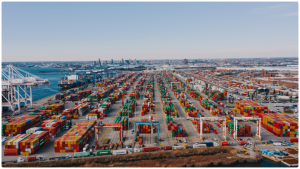
Coffee Export Procedures
Step 1: Prepare Export Documentation
- Commercial Invoice
- Sales Contract
- Packing List
- Bill of Lading
- Certificate of Origin (C/O)
- Phytosanitary Certificate (if required)
- Certificate of quality, weight, quantity (as requested by buyer)
>> Read more: Bill of Lading (B/L) and Sea Waybill: Key Documents in Maritime Shipping
Step 2: Electronic Customs Declaration
Businesses must use the ECUS5-VNACCS software to:
- Enter shipment data
- Submit to customs system
- Receive risk channel (Green/Yellow/Red) for further processing or inspection
Step 3: Apply for Additional Documents (as required by market)
- CFS (Certificate of Free Sale): Verifies product is allowed for sale in the country of export
- Phytosanitary Certificate: Mandatory for countries with plant health agreements with Vietnam
- FDA Registration: Required for exporting to the U.S.
Bulk Coffee Transportation Solutions
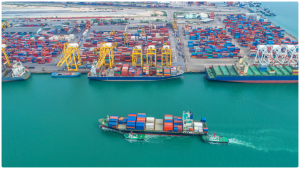
Bulk Coffee Transportation
King Freight Logistics Vietnam (KFLV) offers specialized logistics solutions for large-scale coffee exports, including:
- International Railway Transport: Cost-effective for shipments to China, Russia, and the EU. Direct connections from Yen Vien, Song Than to border and destination stations.
- Ocean Freight (Containerized): Ideal for high-volume shipments to the U.S. and Europe. Coffee is protected in moisture-controlled containers.
- Door-to-Door Services: Pickup from warehouses in Vietnam and delivery to buyers’ warehouses abroad.
>> Read more: Door-to-Door Transportation: Convenience and Efficiency in International Logistics
Key Export Tips for Coffee Traders
-
- Preserve original manufacturer packaging
- Clearly display ingredients, production and expiry dates
- Ensure no mold, contamination, or excess chemical residues
- Maintain full documentation: business license, warehouse release slips, lab test reports (if required).
Exporters should communicate regularly with overseas buyers to stay updated on the latest packaging and compliance requirements. Thorough preparation minimizes customs delays, reduces costs, and improves supply chain efficiency.
Speed Up Your Coffee Export Procedures with KFLV
Vietnam holds a strong position in the global coffee industry. To sustain growth, exporters must comply with each market’s requirements and streamline their logistics processes. With in-depth industry knowledge and a nationwide logistics network, KFLV is ready to support your coffee export journey—from regulatory guidance to international transportation.
Contact our hotline at +84 (0) 938 188 796 or email cs1@hcm.kfkingfreight.com today for a free consultation and optimal logistics plan tailored for your coffee exports.
Written bykflv.vn
Other activities


Other news
What is a Surrendered Bill of Lading? When Should It Be Used in International Trade? In international shipping, a Bill of Lading (B/L) is not only a transport document but can also function as a document of title to the cargo. However, in many cases businesses do not need this ownership function and choose to […]