

What Is Customs Inspection? Everything About Customs Checks, Red Channel, and Clearance Procedures
What Is Customs Inspection?
What Is Customs Inspection?
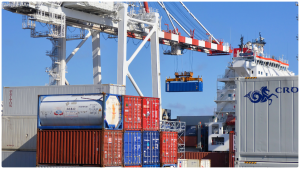
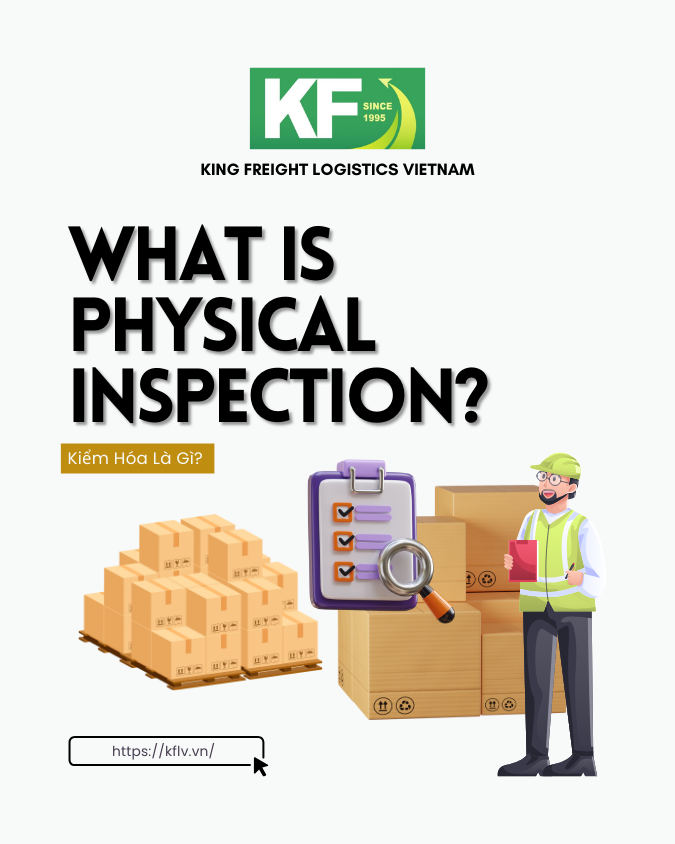
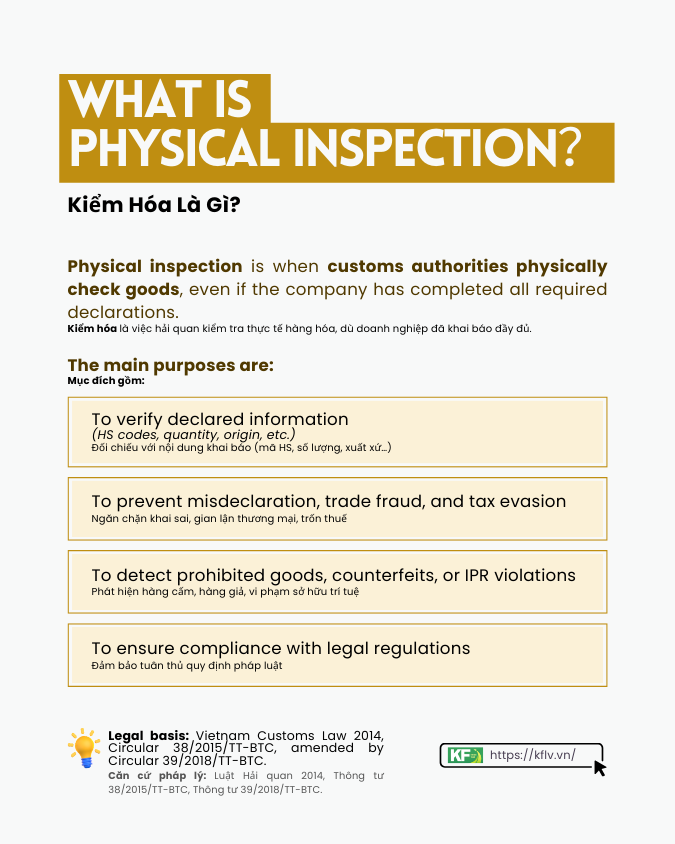
A customs inspection is the physical examination of goods by customs authorities to verify their consistency with the declared information on the customs declaration form. This is a critical step in the clearance process to ensure that the goods’ type, quantity, value, and legality comply with local regulations.
- In English: Customs inspection
- In Chinese: 查验货物 (chá yàn huò wù)
Common Misconceptions:
- Customs inspection ≠ Inventory audit: Inventory checks are internal procedures to verify actual stock levels.
- Customs inspection ≠ Product inspection: Product inspection focuses on quality and safety standards (e.g., machinery, food, consumer goods).
When Are Goods Subject to Customs Inspection?
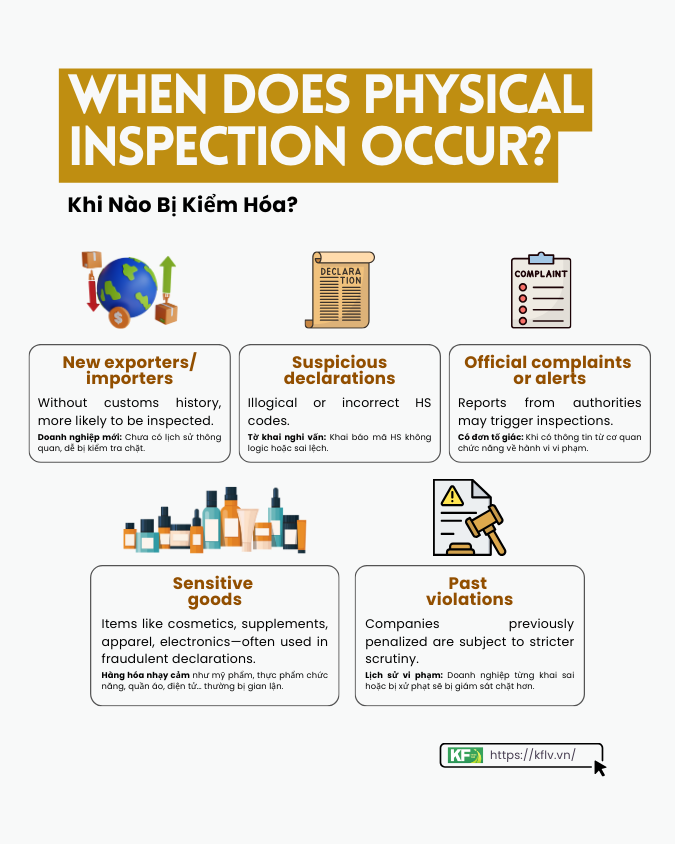
Not all shipments undergo inspection. Customs may require inspection in the following cases:
- Declaration is flagged as red channel
- Suspicious or incorrect HS codes, quantities, or declared values
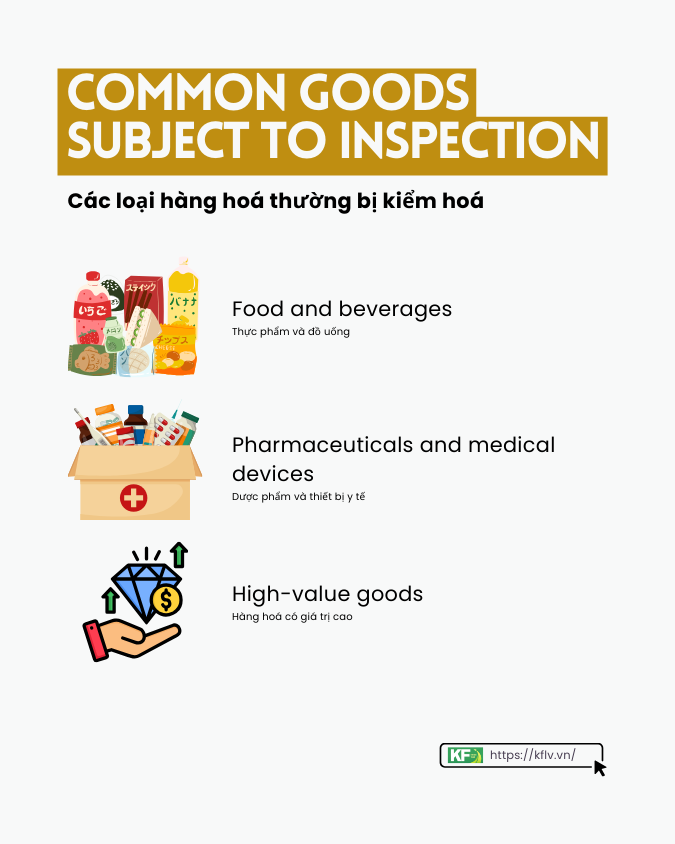
- Goods fall under sensitive or controlled categories
- First-time or non-compliant importers/exporters
- Suspected tax evasion or trade fraud
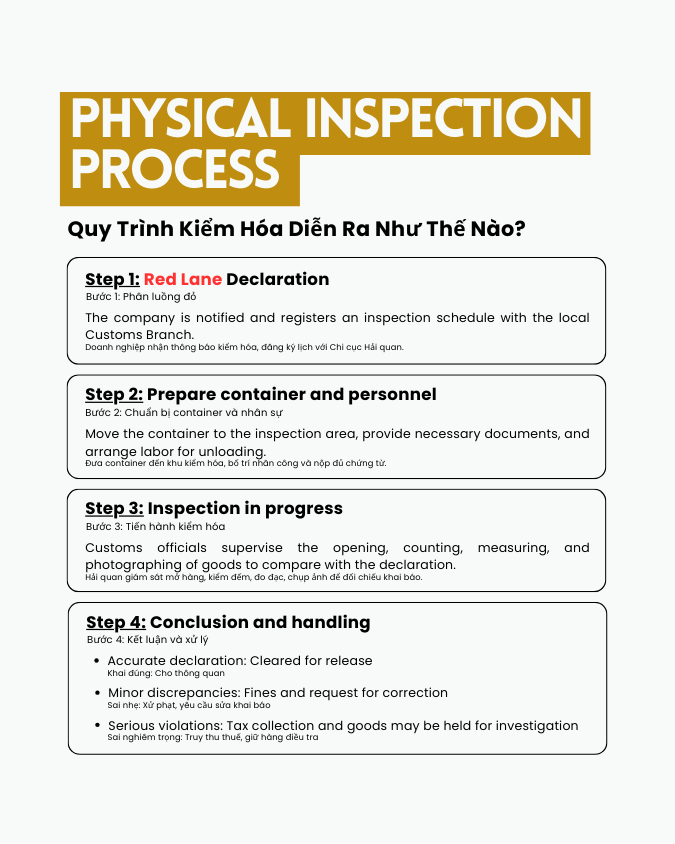
What Is the Red Channel? Under Vietnam’s customs clearance system (green – yellow – red), the red channel is the highest level of scrutiny. It involves both document review and physical inspection. A red channel assignment means a mandatory customs inspection.
Common Types of Customs Inspection
Common Types of Customs Inspection
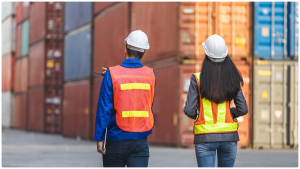
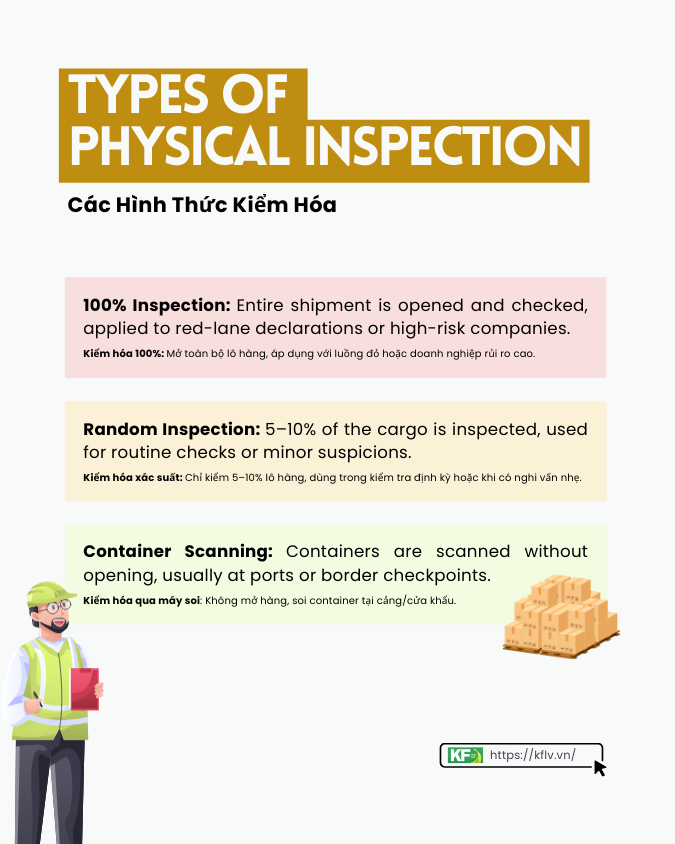
Depending on the level of risk and customs policies, inspections may be conducted in the following forms:
- 100% Inspection: Full examination of all goods in the shipment
- Random Sampling: Partial and random checks within the cargo
- X-Ray Scanning: Using scanners to inspect without opening containers
- No Goods Present: Goods are not available at the inspection yard at the scheduled time due to premature removal or logistics issues
These forms often result in longer clearance time and additional costs for the exporter/importer.
Customs Inspection Process in Vietnam
The typical customs inspection procedure includes:
- Electronic customs declaration submission
- Declaration is assigned a channel (green/yellow/red)
- If red, customs issues an inspection notice specifying time and location
- Goods are moved to the inspection yard or re-routed to another location
- Joint inspection between customs and business representative
- Inspection report is completed and signed
- If compliant, goods are cleared for release
Key Terms You Should Know:
- Re-routed inspection: Changing the designated inspection site
- Lowering for inspection: Unloading the container for physical check
- Inspection yard: Designated customs-controlled area for inspections
Risks and Impacts of Customs Inspection
Being subject to customs inspection can lead to significant business consequences:
- Delivery Delays: Inspection can take several hours to days, impacting time-sensitive orders
- Extra Costs: Including yard storage fees, lifting charges, trucking, and staff time
- Fines & Penalties: Incorrect HS codes, under-declared values may trigger fines or tax reassessments
- Damaged Reputation: Delayed or problematic shipments can hurt trust with overseas partners
How Should Businesses Prepare for Inspection?
To ensure a smooth and quick customs inspection, businesses should:
- Prepare complete documentation: Invoice, packing list, contract, C/O, declaration, licenses (if applicable)
- Neatly arrange goods in order for easy verification
- Assign experienced staff to be present at the inspection site
- Coordinate with logistics providers to arrange transportation and customs appointments
Practical Tips for Faster Clearance
From our experience, here are some effective tips:
- Create a customs inspection checklist by product type
- Take photos of cargo before sealing for evidence
- Clearly label item positions in the packing list
- Have interpreters or staff ready to explain when needed
- Work with logistics partners experienced in handling customs inspections, especially for last-minute changes at the port
How to Minimize the Risk of Inspection?
While inspections may be unavoidable, businesses can reduce their chances by:
- Declaring truthfully and consistently across all documents
- Avoiding frequent changes between contract and declaration
- Staying updated on new customs and regulatory policies
- Building a compliant history to increase chances of green channel
- Partnering with reputable logistics and customs brokers with proven experience
Customs Inspection & Red Channel Logistics Services
Customs Inspection & Red Channel Logistics Services
Customs inspection and red channel issues can cause costly delays and penalties. A strategic approach—combining documentation accuracy and strong logistics coordination—is key.
King Freight Logistics Vietnam (KFLV) offers full-service logistics support to help businesses navigate customs inspections effectively:
- Consultation and document prep based on customs requirements
- Assistance with yard transfer, container unloading, and on-site inspection
- Equipment and vehicle coordination for inspection schedules
- Red channel handling guidance and root-cause analysis
- End-to-end support from declaration to post-clearance audits
Contact us today: +84 (0) 938 188 796 or cs1@hcm.kfkingfreight.com to receive an optimized customs inspection plan and logistics solution for your shipments.
Written bykflv.vn
Other activities

Other news
What is a Surrendered Bill of Lading? When Should It Be Used in International Trade? In international shipping, a Bill of Lading (B/L) is not only a transport document but can also function as a document of title to the cargo. However, in many cases businesses do not need this ownership function and choose to […]