

Phytosanitary Certificate — A Complete Guide for Import and Export Businesses
What is a Phytosanitary Certificate?

What is a Phytosanitary Certificate?
A Phytosanitary Certificate (also called a plant health certificate or plant quarantine certificate) is an official document issued by an authorized plant quarantine agency. It certifies that a shipment of plants, agricultural products, or regulated articles has been inspected and found free from harmful organisms, pests, or quarantine subjects as defined by law.
This certificate is mandatory in international trade for commodities subject to plant quarantine regulations.
Legal Framework in Vietnam (Summary)
The main legal documents governing plant quarantine in Vietnam include:
- Law on Plant Protection and Quarantine No. 41/2013/QH13
- Consolidated legal documents and circulars issued by the Ministry of Agriculture and Rural Development (MARD).
Currently, the Consolidated Document 06/VBHN-BNNPTNT (2023) serves as the primary reference outlining the procedures and requirements for plant quarantine in Vietnam.
Purpose and Scope of Application
The issuance of a Phytosanitary Certificate aims to prevent the introduction and spread of pests, weeds, and harmful organisms between regions and across borders. It helps safeguard domestic agriculture and ensures safe international trade.
The certificate applies to:
- Seeds and planting materials
- Cuttings, shoots, grafts, and scions
- Tubers and bulbs
- Plant products for trade
- Wooden packaging materials
- Beneficial organisms (when subject to quarantine)
Mandatory Information on a Phytosanitary Certificate
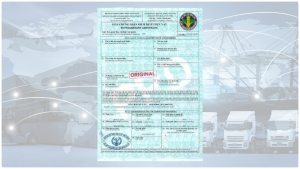
Mandatory Information on a Phytosanitary Certificate
To be valid for customs clearance and international trade, a Phytosanitary Certificate must include:
- Title and reference number of the certificate
- Name and address of exporter and consignee
- Common name and scientific name of products; quantity and weight; packaging type and marks
- Place of production/packing, means of transport, and port of entry
- Inspection results (confirmation of no harmful organisms or list of items inspected)
- Seal and signature of the issuing authority; date of issue; tracking reference number
>> Read More: Packing Standards for Oversized Cargo
Issuance Timeline and Post-Import Monitoring
Issuance timeline:
If no pests or quarantine organisms are detected, the plant quarantine authority will issue the Phytosanitary Certificate within 24 hours from the start of inspection. If further laboratory analysis or additional checks are required, the authority must notify the applicant with reasons for delay.
Post-import monitoring:
Certain regulated articles require a monitoring period before being released for circulation:
- Shoots, scions, grafts: 1–2 years
- Trees: 6–12 months
- Tubers and bulbs: 1 growing cycle
- Beneficial organisms: at least one generation
Application Process — Checklist for Businesses
A. Required Documents
- Application form for plant quarantine (import, export, or transit)
- Commercial Invoice, Packing List, and Bill of Lading (B/L) or equivalent transport document
- Phytosanitary Certificate from the exporting country (for imports or re-exports)
- Import permit (if required by law)
- Supporting documents (e.g., Certificate of Origin, traceability documents) upon importer’s request
B. Basic Steps
- Registration and declaration: Submit documents to the Regional Plant Quarantine Sub-Department or via the electronic system (PQS / National Single Window).
- Document review: Authority verifies and determines the level of inspection (preliminary or detailed).
- Sampling and inspection: Samples are collected at factory, port, or designated locations depending on commodity type.
- Issuance of certificate: If compliant, the Phytosanitary Certificate is issued; if not, remedial actions are required (border treatment, re-export, or destruction).
PQS System — Digital Filing Benefits for Businesses
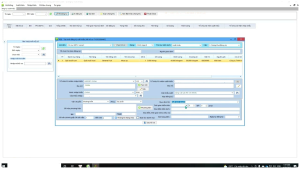
PQS System
The Plant Quarantine Services (PQS) system allows companies to create accounts, submit declarations, track processing status, and prepare draft certificates online. Using PQS minimizes human errors, shortens processing time, and facilitates smoother coordination for sampling, payments, and certificate issuance.
Common Mistakes and Recommendations
Frequent mistakes:
- Submitting incomplete or inaccurate documents (HS codes, scientific names, weight, or B/L details)
- Missing original Phytosanitary Certificate from the exporting country (when required)
- Overlooking mandatory quality inspections (for food products subject to both quarantine and quality checks)
- Failing to pre-declare on PQS / National Single Window, leading to delays
Recommendations:
- Always check the official list of regulated articles
- File early through PQS for faster processing
- Standardize documents (invoice, packing list, B/L, CO if required)
- Contact the local Plant Quarantine Sub-Department in advance to confirm sampling and inspection arrangements
The Phytosanitary Certificate is a critical legal document for businesses trading agricultural goods and plant products. Understanding what it is, its legal basis, the application process, issuance timelines, and monitoring requirements helps companies avoid customs delays, extra costs, and shipment losses.
>> Read More: What is C/O Form E? Procedures & ACFTA Preferential Tariff Regulations for Import-Export Businesses
Solution for Phytosanitary Certificate Procedures
Solution for Phytosanitary Certificate Procedures
Missing or incorrectly declaring a phytosanitary certificate can result in agricultural products, food items, and wood-packaging materials being denied entry, forced for re-export, or destroyed at the port — leading to financial loss and shipment delays. As more markets tighten inspection requirements and adopt electronic declaration systems, understanding the correct regulations becomes essential for smooth clearance.
At King Freight Logistics Vietnam (KFLV), we provide advisory support to help businesses:
- Determine whether a shipment requires a Phytosanitary Certificate (Phyto).
- Understand relevant procedures, documentation, and compliance standards for specific cargo types.
- Review documentation to reduce errors when businesses perform declarations on their own.
- Recommend logistics, customs handling, and transportation solutions to optimize export flow.
Consult first — prevent costly risks later. Need to verify if your shipment requires a Phytosanitary Certificate? Contact us today at +84 (0) 938 188 796 or email cs1@hcm.kfkingfreight.com to get detailed assistance from KFLV.
Written bykflv.vn
Other activities


Other news
What is a Surrendered Bill of Lading? When Should It Be Used in International Trade? In international shipping, a Bill of Lading (B/L) is not only a transport document but can also function as a document of title to the cargo. However, in many cases businesses do not need this ownership function and choose to […]