

What is RCEP? Overview of the Regional Comprehensive Economic Partnership
What is RCEP?
What is RCEP?
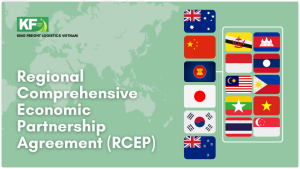
RCEP (Regional Comprehensive Economic Partnership) is a free trade agreement (FTA) between the 10 ASEAN countries and 5 FTA partners (Australia, China, Japan, South Korea, and New Zealand).
Initially, India also participated in the negotiations but withdrew in 2019.
The goal of RCEP is to liberalize trade, promote investment, and reduce tariff and non-tariff barriers among member countries.
>> Read More: Exporting Raw Materials & Supplies for Overseas Processing
When Did RCEP Take Effect?
- Signed: November 15, 2020, at the 37th ASEAN Summit (Hanoi, Vietnam).
- Effective date: January 1, 2022, for countries that completed the ratification process.
- Vietnam: The agreement took effect on January 1, 2022.
RCEP Member Countries
- 10 ASEAN countries: Brunei, Cambodia, Indonesia, Laos, Malaysia, Myanmar, the Philippines, Singapore, Thailand, and Vietnam.
- 5 FTA partners: Australia, China, Japan, South Korea, and New Zealand.
Main Contents of RCEP
The RCEP agreement consists of 20 chapters and 4 annexes, covering:
- Trade in goods: Gradual reduction and eventual elimination of tariffs.
- Trade in services: Opening service markets and facilitating business operations.
- Rules of origin: Harmonized criteria to qualify for preferential tariffs.
- Customs procedures & trade facilitation: Streamlining clearance processes.
- Investment: Investor protection and encouraging FDI flows.
- Intellectual property: Protection of intellectual property rights within the bloc.
- E-commerce: Facilitating cross-border online trade.
- Small and Medium Enterprises (SMEs): Supporting greater participation in supply chains.
Rules of Origin in RCEP
Rules of Origin in RCEP
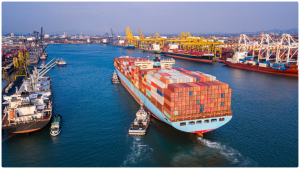
Rules of Origin (ROO) under RCEP allow goods produced in any member country that meet origin requirements to enjoy preferential tariffs when exported to other members.
Key highlights:
- A single certificate of origin valid across the entire bloc.
- More flexible rules than many other FTAs, making compliance easier for businesses.
Benefits of RCEP for Vietnamese Businesses
- Expanded export markets with preferential tariffs.
- Lower logistics costs thanks to simplified customs procedures.
- Easier compliance with rules of origin when sourcing materials from any RCEP member.
- Greater investment opportunities from major economies in the region.
Comparison of RCEP with Other Trade Agreements
| Criteria | RCEP | CPTPP | ATIGA |
| Members | 15 (ASEAN + 5) | 11 | 10 ASEAN countries |
| Market openness | Moderate – flexible | High – extensive | Intra-ASEAN |
| Rules of origin | Unified across the bloc | Agreement-specific | ASEAN-specific |
| Beneficiaries | Goods, services, investment traders | Exporters to developed markets | Intra-ASEAN traders |
Impact on Vietnam’s Imports and Exports
- Exports: Agricultural products, seafood, textiles, and footwear benefit from tariff reductions.
- Imports: Machinery, equipment, and raw materials from member countries at preferential prices.
- Supply chain: Enables Vietnam to integrate deeper into the Asia–Pacific supply chain.
RCEP is not only the world’s largest trade agreement in terms of population and GDP but also a strategic opportunity for Vietnamese businesses to expand markets, cut costs, and improve competitiveness. However, to fully capitalize on RCEP, businesses must clearly understand rules of origin, tariff schedules, and customs procedures in each member country.
>> Read More: What Is the CPTPP Agreement?
Helping Businesses Maximize RCEP Opportunities
Helping Businesses Maximize RCEP Opportunities
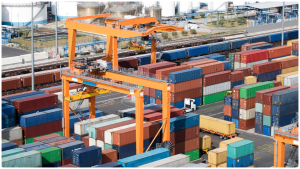
RCEP opens vast trade opportunities for Vietnamese enterprises in sectors such as agriculture, seafood, textiles, wood products, and electronic components. However, to fully leverage preferential tariffs, meet rules of origin requirements, and avoid legal risks, businesses must prepare thoroughly — from documentation and procedures to transportation.
King Freight Logistics Vietnam (KFLV) – your trusted international logistics partner – is committed to supporting businesses through:
- Comprehensive export documentation consulting tailored to each RCEP market.
- Accurate customs declaration of HS codes, trade types, and application of RCEP preferential tariffs.
- Support in obtaining RCEP Certificates of Origin (C/O) and guidance on origin documentation.
- Multi-modal international transportation optimized for time and cost, suited to different product categories.
- End-to-end logistics solutions from your warehouse to the final customer in any RCEP member country.
Contact us today for a free consultation and customized export solutions to RCEP markets — safe, efficient, and cost-optimized:
Hotline: +84 (0) 938 188 796
Email: cs1@hcm.kfkingfreight.com
Written bykflv.vn
Other activities

Other news
What is a Surrendered Bill of Lading? When Should It Be Used in International Trade? In international shipping, a Bill of Lading (B/L) is not only a transport document but can also function as a document of title to the cargo. However, in many cases businesses do not need this ownership function and choose to […]