

Exporting Raw Materials & Supplies for Overseas Processing: What Vietnamese Businesses Must Know (2025 Update)
Amid ongoing globalization, many Vietnamese companies are exporting raw materials and semi-finished goods abroad for subcontracted processing, aiming to reduce costs and enhance competitiveness. This includes inputs for cosmetics, beer, animal feed, pharmaceuticals, stainless steel, and gold—turning international subcontracting into a growing trend.
Vietnam’s Export Processing Market in 2025
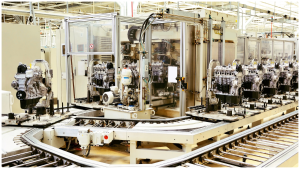
Vietnam’s Export Processing Market in 2025
In 2025, Vietnam sees a notable increase in material and supply exports to countries like China, South Korea, Japan, and Thailand for contract manufacturing. Businesses are leveraging free trade agreements (FTAs) such as EVFTA, RCEP, and CPTPP to enjoy tax exemptions and integrate more deeply into global supply chains.
>> Read More:
What is EVFTA? The EU-Vietnam Free Trade Agreement Explained
What Is the CPTPP Agreement? Opportunities and Challenges for Vietnamese Businesses
What is RCEP? Overview of the Regional Comprehensive Economic Partnership
What Is Subcontracted Processing in Export-Import?
Processing (or subcontracting) refers to an arrangement where one party (the ordering business) provides raw materials, supplies, or semi-finished goods to another party (the processor) to carry out manufacturing, assembly, or finishing based on specific technical requirements and designs.
In Vietnam, export processing is encouraged through preferential tax rates, warehousing support, and lower logistics costs—particularly in the following sectors:
- Custom stainless-steel processing
- Precision mechanical machining
- Gold and iron processing
Common Processing Types:
- Full processing: The ordering party provides all materials and technical input.
- Partial processing: The Vietnamese party supplies part of the materials.
- Subcontracting transfer: Processing is delegated to an approved third party.
Legal Procedures & Involved Parties
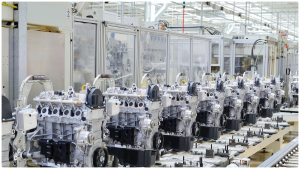
Legal Procedures & Involved Parties
Key Stakeholders:
- Vietnamese enterprise placing the order
- Foreign subcontractor performing the processing
- State agencies: Vietnam Customs, origin-certification authorities, and tax departments
Applicable Legal Documents:
- Law on Foreign Trade Management (2017)
- Decree 69/2018/ND-CP (amended 2023)
- Circulars 38/2015/TT-BTC & 39/2018/TT-BTC (electronic customs)
- New regulations for C/O Form B (Ministry of Industry and Trade – 2025 update)
Required Documents for Exporting Materials for Processing Abroad
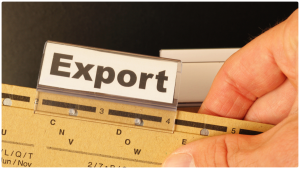
Required Documents for Exporting Materials for Processing Abroad
Companies must prepare the following:
Export customs declaration using Form No. 02, Appendix II (Circular 38/2015/TT-BTC, amended by Circular 39/2018/TT-BTC).
For paper declarations: use Form HQ/2015/XK (2 originals).
Commercial invoice or equivalent: 1 copy
Timber declaration list (for raw wood exports): 1 original
Export license (if applicable):
- One-time export: 1 original
- Multiple exports: 1 original submitted for the first shipment
Specialized inspection certificates: 1 original or copy as required
Proof of export eligibility (per Investment Law): 1 copy for the first shipment
Entrustment contract: 1 copy (if applicable)
Resource & mineral notification (if total mineral & energy cost <51% of production cost): 1 original
If documents are submitted electronically via the National Single Window portal, physical copies are not required.
Customs Clearance Timeline
- Document check: within 2 business hours after full submission
- Physical inspection: within 8 business hours after goods are presented
Subject to specialized inspection: time starts once results are received - Inspection extension (for large/complex shipments): up to 2 days maximum
Final Result
After all checks, the customs authority will either approve export clearance or deny it based on compliance.
Processing Workflow for Exported Materials
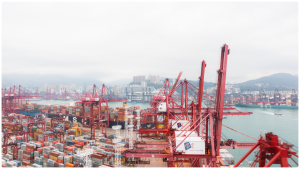
Processing Workflow for Exported Materials
Step 1: Sign a processing contract
Clearly define scope, materials, subcontractor, tax handling, and waste disposal.
Step 2: Declare export to customs
- Customs declaration (E52 code)
- Commercial invoice
- Packing list & bill of lading
Step 3: Subcontract processing abroad
Processes may include cooling, grinding, polishing, sterilizing, packaging, etc.
Maintain documents on waste, consumption rates, and finished product reports.
Step 4: Re-import the processed goods
- Import declaration (E31 code)
- Certificate of Origin (C/O Form B, CPTPP, EVFTA, etc.)
- Required documents: invoice, packing list, BOM, etc.
Step 5: Contract liquidation & tax settlement
- Settle VAT/import tax (if applicable)
- Report on inventory, excess materials, waste, etc.
Common Exported Materials for Subcontracting
- Gold materials: to Switzerland, UAE
- Steel & stainless steel: to China, South Korea for high-end processing
- Cosmetic, food, and feed ingredients: imported from Europe, processed in Vietnam
Business Benefits of Overseas Subcontracting
- Reduce labor and machinery costs
- Maximize FTA benefits (CPTPP, RCEP…)
- No need to set up overseas branches
- Speed up supply chain efficiency and delivery time
Important Notes on Taxes, Contracts, and C/O Forms
- VAT/import tax: must be accurately handled upon re-import
- C/O Forms: must demonstrate material origin via LVC or CTSH rules
- Stricter origin control from 2025 onwards due to US and EU enforcement
Need Customized Guidance?
Exporting materials for overseas processing is a strategic solution to cut costs, accelerate time-to-market, and expand globally. However, compliance with contracts, documentation, origin proofs, and customs declarations is essential for smooth operations.
King Freight Logistics Vietnam (KFLV) provides full-service support for manufacturers and exporters, including:
- Documentation consulting tailored to your business
- Electronic customs declaration & tax settlement
- International shipping & door-to-door delivery
- Monitoring re-import deadlines & extension handling
- Full document archiving for audit compliance
Contact our hotline at +84 (0) 938 188 796 or email cs1@hcm.kfkingfreight.com for immediate support!
Written bykflv.vn
Other activities

Other news
What is a Surrendered Bill of Lading? When Should It Be Used in International Trade? In international shipping, a Bill of Lading (B/L) is not only a transport document but can also function as a document of title to the cargo. However, in many cases businesses do not need this ownership function and choose to […]