

What is CO Form D? A Complete Guide for Export-Import Businesses
What is CO Form D?

What is CO Form D?
CO (Certificate of Origin) is an official document certifying the origin of goods, confirming the country where the product was manufactured or processed. Among them, CO Form D is a certificate for goods exported to ASEAN countries, allowing businesses to benefit from tariff preferences under the ATIGA Agreement (formerly CEPT).
When the importer presents a valid C/O Form D to customs authorities, the goods will be exempted or reduced from import duties under the agreement. Therefore, this document plays a crucial role for all businesses exporting to ASEAN.
>> Read More: ATIGA Agreement
Which countries does CO Form D apply to?
CO Form D is used in trade among the ten ASEAN member states, including Vietnam, Laos, Cambodia, Myanmar, Thailand, Malaysia, Singapore, Brunei, Indonesia, and the Philippines.
Understanding the scope of application helps businesses plan their export strategies effectively, especially when leveraging tariff incentives within the region.
>> Read More: What Are CO and CQ?
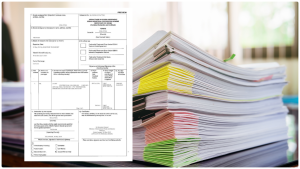
Documents required for CO Form D application
Documents required for CO Form D application
To obtain a CO Form D, businesses need to prepare:
- Original Commercial Invoice
- Packing List
- Customs Declaration (already cleared)
- Copy of Bill of Lading
- Production process explanation
- Local Value Content (LVC) calculation
- Domestic purchase invoices or import customs declarations for raw materials
- CO application form following the Ministry of Industry and Trade’s template
- Other permits or supporting documents as required by the type of goods
Businesses must submit the application online through the eCoSys system of the Ministry of Industry and Trade before submitting hard copies.
CO Form D issuance process and timeline
- Step 1: Submit the online application on eCoSys
- Step 2: Submit hard copies at the Import-Export Management Office – Ministry of Industry and Trade
- Step 3: Verification by the issuing authority
- Step 4: CO Form D issuance (typically within 3 working days if documents are valid)
Electronic CO Form D
Under Circular 10/2022/TT-BCT, the electronic C/O Form D system has been implemented among ASEAN countries, enabling businesses to save time and reduce paperwork. Member states’ customs authorities may accept e-COs instead of hard copies, depending on each country’s regulations.
Important notes when completing CO Form D
Important notes when completing CO Form D
CO Form D must be completed in English following the official template provided by the Ministry of Industry and Trade. Each set includes one original and two copies, each with a unique reference number, signature, and stamp from the issuing authority.
Applications may be rejected if information is inaccurate, documents are altered, handwritten with multiple ink colors, or if goods do not meet ATIGA’s origin criteria. Therefore, businesses should carefully review their documents before submission to avoid delays.
Special cases
- Issued Retroactively: Issued after the goods have left port
- Third Country Invoicing: Invoice issued by a third country
- Exhibitions: Goods for exhibition purposes
>> Read More:
What is CO Form EAV? A Complete Guide to the EAV Certificate of Origin and Key Considerations
Maximize ASEAN tariff preferences with CO Form D
To fully benefit from FTA tariff incentives, businesses need not only to understand CO Form D regulations but also to ensure compliance from the very first step of declaration. With expertise in logistics and in-depth knowledge of Rules of Origin (ROO), King Freight Logistics Vietnam (KFLV) is ready to support you at every stage—from document consultation, HS code verification, and C/O application to customs clearance.
Contact us today via hotline: +84 (0) 938 188 796 or email cs1@hcm.kfkingfreight.com for free consultation and optimal solutions for your export shipments.
Written bykflv.vn
Other activities


Other news
What is a Surrendered Bill of Lading? When Should It Be Used in International Trade? In international shipping, a Bill of Lading (B/L) is not only a transport document but can also function as a document of title to the cargo. However, in many cases businesses do not need this ownership function and choose to […]